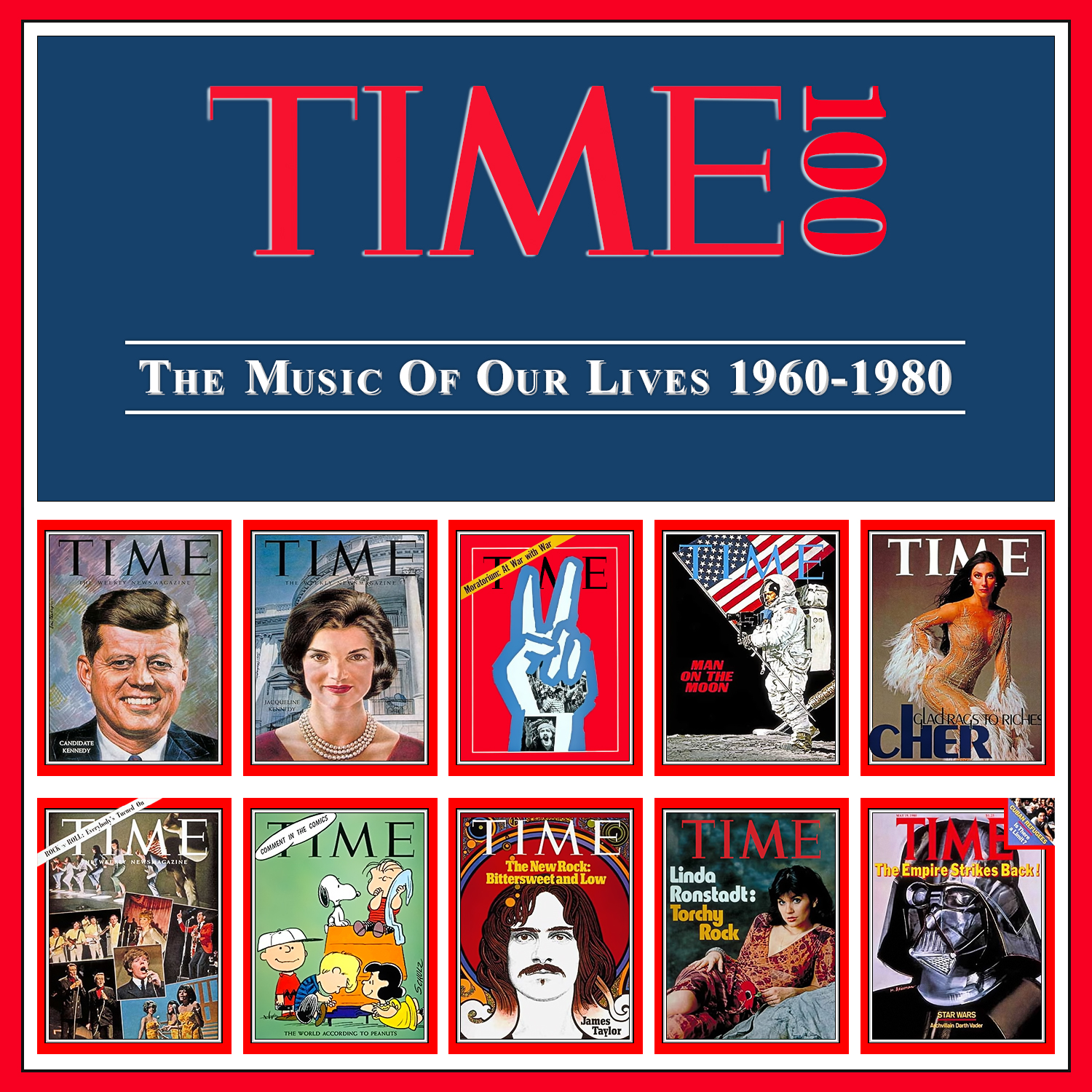
Time 100: The Music of Our Lives 1960-1980

~ Release by Various Artists (see all versions of this release, 1 available)

Annotation

This compilation (p) & (c) 1999 Warner Music Canada Ltd.

Annotation last modified on 2013-10-03 02:08 UTC.

Tracklist

1CD
2CD
#TitleArtistRatingLength
1Fire and Rain
engineer:
Bill Lazerus (in 1969-12)
producer:
Peter Asher (in 1969-12)
acoustic guitar and lead vocals:
James Taylor (singer-songwriter and guitarist) (in 1969-12)
double bass:
Bobby ‘Wild, Wild’ West (in 1969-12)
drums (drum set):
Russ Kunkel (session drummer) (in 1969-12)
piano:
Carole King (in 1969-12)
phonographic copyright (℗) by:
Warner Bros. Records Inc. (not for release label use, company behind the “WB Records” imprint) (in 1969)
recorded at:
Sunset Sound in Hollywood, Los Angeles, California, United States (in 1969-12)
part of:
Rolling Stone: 500 Greatest Songs of All Time: 2021 edition (number: 146) and Rolling Stone: 500 Greatest Songs of All Time (as at 2016-06-10) (number: 227)
recording of:
Fire and Rain (in 1969-12)
lyricist and composer:
James Taylor (singer-songwriter and guitarist)
publisher:
Country Road Music, Inc. (ASCAP-affiliated) (ended), EMI Blackwood Music Inc. and フジパシフィックミュージック SBK事業部 (Fujipacific Music SBK Department)
James Taylor4.33:24
2Maggie May
producer:
Rod Stewart
12 string guitar, bass guitar and electric guitar:
Ronnie Wood (UK guitarist, member of The Rolling Stones, also goes by Ron Wood) (in 1971)
acoustic guitar:
Martin Quittenton (guitarist for Steamhammer) (in 1971)
celesta:
Pete Sears (in 1971)
cymbal and membranophone:
Micky Waller (in 1971)
Hammond organ:
Ian McLagan (in 1971)
mandolin:
Ray Jackson (in 1971) and David Lindley (in 1971)
lead vocals:
Rod Stewart (in 1971)
phonographic copyright (℗) by:
Mercury Records Inc. (copyrights use only) (in 1971), PolyGram Records, Inc. (not for release label use! US division of PolyGram) (in 1971), The Island Def Jam Music Group (American holding company, not normally a release label) (in 1971) and UMG Recordings, Inc. (operational headquarters of Universal Music Group, based in Santa Monica, USA; read annotations) (in 1971)
recording of:
Maggie May (in 1971)
publisher:
Rod Stewart
writer:
Mike Peters, Martin Quittenton (guitarist for Steamhammer) and Rod Stewart
publisher:
Chappell Music Ltd., Copyright Control (not for release label use! this is only for copyrights and publishing relationships), EMI April Music Inc., EMI Blackwood Music Inc., EMI Full Keel Music, EMI Music Publishing (do not use as a release label!), EMI Music Publishing Ltd. (PRS‐affiliated), H. G. Music Inc, Mushroom Music (Mushroom label’s publishing company), Rightsong Music Inc., Unichappell Music, Inc., Warner Chappell and Warner Chappell Music (holding behind all publishing activities of Warner Music Group, 2019–)
Rod Stewart4.25:16
3Evil Ways
engineer:
Bob Breault and Eric Prestidge
producer:
Brent Dangerfield and Santana (US Latin, blues, & rock band)
bass guitar:
David Brown (US bassist for Santana/Allman Brothers/31st of February) (on 1969-05-12)
congas and percussion:
Michael Carabello (percussionist) (on 1969-05-12)
congas, percussion and timbales:
José “Chepito” Áreas (on 1969-05-12)
drums (drum set):
Michael Shrieve (drummer) (on 1969-05-12)
guitar:
Carlos Santana (on 1969-05-12)
organ and piano:
Gregg Rolie (keyboardist and vocalist) (on 1969-05-12)
vocals:
Gregg Rolie (keyboardist and vocalist) (on 1969-05-12) and Carlos Santana (on 1969-05-12)
arranger:
Alberto Gianquinto
phonographic copyright (℗) by:
CBS, Inc. (US broadcasting company; file no releases here!) (in 1969), Sony BMG Music Entertainment (Aug 5, 2004 – Oct 1, 2008) (in 1969) and Sony Music Entertainment Inc. (company owned by Sony Corporation of America from 1991–2004, operated worldwide except in JP; normally not a release label) (in 1969)
recorded at:
Pacific Recording Studio in San Mateo, California, United States (on 1969-05-12)
mixed at:
Pacific Recording Studio in San Mateo, California, United States
part of:
Billboard Year-End Hot 100 singles of 1970 (number: 69)
cover recording of:
Evil Ways (on 1969-05-12)
lyricist and composer:
Clarence “Sonny” Henry (US jazz guitarist aka Sonny Henry)
publisher:
EMI United Partnership Ltd., Gibson Music, Richcar Music, Sah Music and Universal–Songs of PolyGram International, Inc.
Santana4.153:57
4What's Going On
producer:
Marvin Gaye
mixer:
Lawrence Miles (on 1971-05-06)
instruments:
Detroit Symphony Orchestra (on 1971-05-06) and The Funk Brothers (on 1971-05-06)
percussion [box drum], piano and lead vocals:
Marvin Gaye (on 1971-05-06)
background vocals:
Lem Barney (on 1971-05-06), Mel Farr (on 1971-05-06) and Marvin Gaye (on 1971-05-06)
conductor:
David Van dePitte (on 1971-05-06)
phonographic copyright (℗) by:
Motown Records (not for label use; use “Motown” instead) (in 1971)
recorded at:
Hitsville (Motown recording and mastering studios in Detroit, Michigan) in Detroit, Michigan, United States (on 1971-05-06)
part of:
Helsingin Sanomat: 100 maailman parasta laulua (2022-1-15) (number: 4), Rolling Stone: 500 Greatest Songs of All Time (as at 2016-06-10) (number: 4), Rolling Stone: 500 Greatest Songs of All Time: 2021 edition (number: 6), Billboard: The 500 Best Pop Songs (as of October 2023) (number: 102) and Rock and Roll Hall of Fame – 500 Songs That Shaped Rock
recording of:
What’s Going On (on 1971-05-06)
lyricist and composer:
Renaldo Benson, Al Cleveland (songwriter 1930-1996) and Marvin Gaye
publisher:
EMI Songs Australia, FCG Music, Jobete Music Co., Inc., MG III Music, NMG Music, Sony/ATV Music Publishing Ltd. and Stone Agate Music Corp.
sub-publisher:
イーエムアイ音楽出版 フジパシフィック事業部 (EMI Music Publishing Japan, Fujipacific Division) (until 2021-06-30) and ソニー・ミュージックパブリッシング フジパシフィック事業部 (Sony Music Publishing (Japan) Inc., Fujipacific Division) (from 2021-07-01 to present)
Marvin Gaye4.23:48
5You're So Vain
recording engineer:
Robin Geoffrey Cable (from 1972-09 until 1972-10)
engineer:
Robin Geoffrey Cable
producer:
Richard Perry (producer)
bass:
Klaus Voorman (from 1972-09 until 1972-10)
drums (drum set):
Jim Gordon (US drummer with Derek and the Dominos) (from 1972-09 until 1972-10)
guitar:
Jimmy Ryan (American guitarist and singer/songwriter) (from 1972-09 until 1972-10)
percussion:
Richard Perry (producer) (from 1972-09 until 1972-10)
piano and lead vocals:
Carly Simon (from 1972-09 until 1972-10)
additional background vocals:
Carly Simon (from 1972-09 until 1972-10) and Doris Troy (from 1972-09 until 1972-10)
background vocals:
Mick Jagger (The Rolling Stones) (from 1972-09 until 1972-10)
strings arranger:
Carly Simon
orchestrator:
Paul Buckmaster
phonographic copyright (℗) by:
Elektra Records (not for release label use! please use its imprint “Elektra” instead) (in 1972), Elektra/Asylum Records (not for release label use! copyrights holder, distributor within the US) (in 1972), Elektra Entertainment (company, DO NOT USE as release label, for releases use “Elektra”) (in 1978), WEA International Inc. (not for release label use! copyrights holder, distributor for the world outside of the US) (in 1984) and Rhino Entertainment Company (not for release label use!) (in 2015)
recorded at:
Trident Studios (London, UK) in Soho, Westminster, London (Greater London), England, United Kingdom (from 1972-09 until 1972-10)
part of:
Billboard: Greatest of All Time Hot 100 Songs (number: 100), Billboard: The 500 Best Pop Songs (as of October 2023) (number: 140) and Rolling Stone: 500 Greatest Songs of All Time: 2021 edition (number: 495)
recording of:
You’re So Vain (from 1972-09 until 1972-10)
lyricist and composer:
Carly Simon
publisher:
C’est Music, Quackenbush Music, Ltd. (ASCAP-affiliated), Universal Music Corporation (USA, affiliated with ASCAP) and Universal Music Publishing Group
Carly Simon4.554:19
6Walk on the Wild Side
producer:
David Bowie (English singer‐songwriter), Lou Reed and Mick Ronson (British guitarist)
baritone saxophone:
Ronnie Ross (in 1972-08)
double bass and electric bass guitar:
Herbie Flowers (in 1972-08)
drums (drum set):
John Halsey (in 1972-08)
background vocals:
The Thunder Thighs (70s UK vocal group) (in 1972-08)
lead vocals:
Lou Reed (in 1972-08)
brass arranger and strings arranger:
Mick Ronson (British guitarist)
arranger:
David Bowie (English singer‐songwriter), Lou Reed and Mick Ronson (British guitarist)
phonographic copyright (℗) by:
BMG Entertainment (in 1972), BMG Music (in 1972), RCA Records (not for release label use! for the imprint, please use “RCA” instead) (in 1972) and Sony BMG Music Entertainment (Aug 5, 2004 – Oct 1, 2008) (in 1972)
recorded at:
Trident Studios (London, UK) in Soho, Westminster, London (Greater London), England, United Kingdom (in 1972-08)
mixed at:
Trident Studios (London, UK) in Soho, Westminster, London (Greater London), England, United Kingdom
samples from:
Lexicon Valley #150, “Why Language Can’t Be Tamed” by John McWhorter
part of:
Indie 88: Top 500 Indie Rock Songs (number: 75), Rock and Roll Hall of Fame – 500 Songs That Shaped Rock, Rolling Stone: 500 Greatest Songs of All Time: 2021 edition (number: 180) and Rolling Stone: 500 Greatest Songs of All Time (as at 2016-06-10) (number: 221)
recording of:
Walk on the Wild Side (in 1972-08)
lyricist and composer:
Lou Reed
publisher:
Dunbar Music, EMI Music Publishing Australia Pty. Limited (not for release label use!), EMI Music Publishing Ltd. (PRS‐affiliated), Oakfield Avenue Music, Oakfield Avenue Music Ltd., Screen Gems–EMI Music Ltd., Screen Gems–EMI Music, Inc. (USA, affiliated with BMI) and Six Continents Music Publishing Inc.
Lou Reed4.254:13
750 Ways to Leave Your Lover
recording engineer:
Glenn Berger and Burt Szerlip
engineer:
Phil Ramone
producer:
Phil Ramone and Paul Simon (of Simon & Garfunkel)
acoustic guitar:
Paul Simon (of Simon & Garfunkel)
bass guitar [bass]:
Tony Levin (US rock bassist/Chapman stick player)
drums (drum set):
Steve Gadd (drummer)
electric guitar:
Hugh McCracken and John Tropea
organ:
Kenny Ascher
percussion:
Ralph MacDonald
background vocals:
Patti Austin, Valerie Simpson and Phoebe Snow
vocals:
Paul Simon (of Simon & Garfunkel)
phonographic copyright (℗) by:
Paul Simon (of Simon & Garfunkel) (in 1975, in 1981, in 2004)
phonographic copyright (℗) by:
CBS, Inc. (US broadcasting company; file no releases here!) (in 1975) and Warner Music H.K. Ltd. (in 1997)
recording of:
50 Ways to Leave Your Lover
lyricist and composer:
Paul Simon (of Simon & Garfunkel)
publisher:
シンコーミュージック・エンタテイメント (Shinko Music Entertainment Co., Ltd.), ユニバーサル・ミュージック・パブリッシング Synch事業部 (Universal Music Publishing, Synch Division), DeShufflin Limited (in 1975) and Paul Simon Music (in 1975)
Paul Simon3.853:34
8Lowdown
engineer:
Tom Perry (engineer)
producer:
Joe Wissert
bass guitar:
David Hungate (in 1975-09)
brass:
Dick Hyde (in 1975-09)
drums (drum set):
Jeff Porcaro (in 1975-09)
guitar:
Louie Shelton (in 1975-09) and Fred Tackett (in 1975-09)
horn:
Vincent DeRosa (in 1975-09)
Minimoog and synthesizer:
David Paich (in 1975-09)
trumpet:
Chuck Findley (trumpet, trombone, horn player) (in 1975-09) and Paul Hubinon (in 1975-09)
wind instruments:
Jim Horn (saxophonist, hornist, flutist and oboist) (in 1975-09), Plas Johnson (in 1975-09), Tom Scott (saxophonist, Blues Brothers, LA Express, Starsky & Hutch) (in 1975-09) and Bud Shank (in 1975-09)
background vocals:
Jim Gilstrap (in 1975-09), Augie Johnson (in 1975-09), Marty McCall (CCM singer/songwriter/worship leader) (in 1975-09) and Carolyn Willis (in 1975-09)
lead vocals:
Boz Scaggs (in 1975-09)
conductor:
Sid Sharp (in 1975-09)
arranger:
David Paich
phonographic copyright (℗) by:
Sony BMG Music Entertainment (Aug 5, 2004 – Oct 1, 2008) (in 1976)
part of:
Paste: The 25 Greatest Yacht Rock Songs of All Time (number: 4)
recording of:
Lowdown (in 1975-09)
lyricist:
Boz Scaggs
composer:
David Paich and Boz Scaggs
publisher:
BMG Songs, Inc., Hudmar Publishing Co. Inc. and Kobalt Music Publishing Ltd. (UK)
sub-publisher:
Sony Music Publishing (Japan) Inc. (song publisher, never a release label), ソニー・ミュージックパブリッシング A事業部 (Sony Music Publishing (Japan) Inc., A Division) and ヤマハミュージックEH(CM) (Yamaha Music EH(CM))
Boz Scaggs45:18
9I’m Not in Love
bass and electric guitar:
Graham Gouldman (from 1974 until 1975)
electric piano and lead vocals:
Eric Stewart (from 1974 until 1975)
Moog [Moog synthesizer]:
Kevin Godley (from 1974 until 1975)
piano:
Lol Creme (from 1974 until 1975)
additional vocals:
Kathy Redfern (from 1974 until 1975)
background vocals:
Lol Creme (from 1974 until 1975), Kevin Godley (from 1974 until 1975) and Graham Gouldman (from 1974 until 1975)
phonographic copyright (℗) by:
UMG Recordings, Inc. (operational headquarters of Universal Music Group, based in Santa Monica, USA; read annotations) (in 1975)
edit of:
I’m Not in Love (album version) by 10cc
recording of:
I’m Not in Love (from 1974 until 1975)
writer:
Graham Gouldman and Eric Stewart
publisher:
EMI Blackwood Music Inc., EMI Music Publishing (do not use as a release label!), EMI Music Publishing Ltd. (PRS‐affiliated), Man-Ken Music Ltd. (, in 1975), Schubert Music Publishing, St. Anne's Music and St. Anne’s Music Ltd.
sub-publisher:
イーエムアイ音楽出版 ソニー事業部 (EMI Music Publishing Japan Ltd., Sony Division) (until 2021-06-30) and ソニー・ミュージックパブリッシング EMI外国事業部 (Sony Music Publishing (Japan) Inc., EMI Overseas Division, sub‐publisher for non‐Japanese works) (from 2021-07-01 to present)
10cc3:59
10Tonight's the Night
producer:
Tom Dowd
lead vocals:
Rod Stewart
phonographic copyright (℗) by:
Warner Bros. Records Inc. (not for release label use, company behind the “WB Records” imprint) (in 1976)
recorded at:
Muscle Shoals Sound Studio in Sheffield, Alabama, United States
recording of:
Tonight’s the Night (Gonna Be Alright)
lyricist and composer:
Rod Stewart
publisher:
Intersong USA, Inc. (publisher)
Rod Stewart3:35
11Don't Stop
assistant engineer:
Chris Morris (LA engineer & producer (late ’70s))
engineer:
Ken Caillat and Richard Dashut
additional producer:
Ken Caillat and Richard Dashut
producer:
Ken Caillat, Richard Dashut and Fleetwood Mac
bass guitar:
John McVie
drums (drum set) and percussion:
Mick Fleetwood
guitar:
Lindsey Buckingham (guitarist, singer, songwriter and producer)
keyboard and synthesizer:
Christine McVie
vocals:
Lindsey Buckingham (guitarist, singer, songwriter and producer), Christine McVie and Stevie Nicks
phonographic copyright (℗) by:
Warner Bros. Records Inc. (not for release label use, company behind the “WB Records” imprint) (in 1977), WEA International Inc. (not for release label use! copyrights holder, distributor for the world outside of the US) (in 1977) and Warner Bros. (holding: file NO releases) (in 2004)
mixed at:
Producer’s Workshop in Hollywood, Los Angeles, California, United States
recording of:
Don’t Stop
lyricist and composer:
Christine McVie
publisher:
BMG Music, BMG Music Publishing Ltd., Fleetwood Mac Music (publisher), Universal Music Publishing (use ONLY if no country‐specific information is available) and Gentoo Music, Inc. (in 1977)
Fleetwood Mac4.23:13
12Wonderful Tonight
producer:
Glyn Johns
bass guitar:
Carl Radle (on 1977-05-02)
drums (drum set):
Jamie Oldaker (on 1977-05-02)
electronic organ:
Dick Sims (on 1977-05-02)
guitar:
Eric Clapton (on 1977-05-02) and George Terry (guitar player with Clapton in 70's) (on 1977-05-02)
background vocals:
Yvonne Elliman (on 1977-05-02) and Marcy Levy (on 1977-05-02)
lead vocals:
Eric Clapton (on 1977-05-02)
phonographic copyright (℗) by:
RSO Records Ltd. (in 1977) and Universal International Music B.V. (not for release label use, for ℗ & © rights holder use only) (in 1977)
recorded at:
Olympic Studios (1966–2009) in Barnes, Richmond upon Thames, London (Greater London), England, United Kingdom (on 1977-05-02)
recording of:
Wonderful Tonight (on 1977-05-02)
lyricist and composer:
Eric Clapton
publisher:
E.C. Music (UK work publisher for Eric Clapton), Throat Music, Throat Music Ltd., Unichappell Music, Inc. and Warner Chappell Music Ltd. (no slash; used 1988–1996)
Eric Clapton4.33:43
13Blue Bayou
recording engineer and mixer:
Val Garay
assistant engineer:
Mark Howlett
producer:
Peter Asher
acoustic guitar:
Waddy Wachtel (from 1977-05-23 until 1977-07-22)
bass guitar [bass] and mandolin:
Kenny Edwards (Bryndle/Stone Poneys/Linda Ronstadt) (from 1977-05-23 until 1977-07-22)
cowbell, drums (drum set) and electronic drum set [syn-drums]:
Rick Marotta (US drummer/percussionist) (from 1977-05-23 until 1977-07-22)
electric piano:
Don Grolnick (from 1977-05-23 until 1977-07-22)
marimba:
Steve Forman (US percussionist) (from 1977-05-23 until 1977-07-22)
steel guitar:
Dan Dugmore (from 1977-05-23 until 1977-07-22)
background vocals:
Kenny Edwards (Bryndle/Stone Poneys/Linda Ronstadt) (from 1977-05-23 until 1977-07-22) and Don Henley (from 1977-05-23 until 1977-07-22)
lead vocals:
Linda Ronstadt (from 1977-05-23 until 1977-07-22)
phonographic copyright (℗) by:
Asylum Records (Warner Music subsidiary) (in 1977), WEA International Inc. (not for release label use! copyrights holder, distributor for the world outside of the US) (in 1978) and Elektra/Asylum Records (not for release label use! copyrights holder, distributor within the US) (in 2017)
recorded at:
Sound Factory, LA (1969–1980) in Los Angeles, California, United States (from 1977-05-23 until 1977-07-22)
part of:
Billboard Year-End Hot 100 singles of 1978 (number: 61)
cover recording of:
Blue Bayou (English) (from 1977-05-23 until 1977-07-22)
lyricist:
Joe Melson (in 1963) and Roy Orbison (in 1963)
composer:
Joe Melson and Roy Orbison
publisher:
Acuff-Rose Publications, Inc. (BMI) (in 1961)
Linda Ronstadt4.253:56
14Baker Street
bass:
Gary Taylor (UK bassist/songwriter/vocalist, member of Herd/Fox/Stealers Wheel) (in 1977)
drums (drum set):
Henry Spinetti (in 1977)
guitar [lead guitar]:
Hugh Burns (in 1977)
guitar [rhythm guitar]:
Nigel Jenkins (in 1977)
keyboard:
Tommy Eyre (in 1977)
percussion:
Glen LeFleur (in 1977)
saxophone:
Raphael Ravenscroft (in 1977)
lead vocals:
Gerry Rafferty (in 1977)
phonographic copyright (℗) by:
EMI Records Ltd. (not for release label use! UK parent of EMI‐owned labels until Sept 2012) (in 1978, in 1980), Parlophone Records Ltd. (not for release label use! a Warner Music Group company) (in 1978) and United Artists Music and Records Group, Inc. (UAMARG, Inc.) (in 1978)
recorded at:
Chipping Norton Recording Studios in Chipping Norton, Oxfordshire, England, United Kingdom (in 1977)
edit of:
Baker Street by Gerry Rafferty
recording of:
Baker Street (in 1977)
lyricist and composer:
Gerry Rafferty
publisher:
B Music, Belfern Ltd., EMI Music Publishing (do not use as a release label!), EMI Publishing Ltd., Icon Music Ltd., Island Music Ltd., Mushroom Music Pty. Ltd., Music of Stage Three, PolyGram Music Publishing, PolyGram Music Publishing Ltd., Screen Gems–EMI Music, Inc. (USA, affiliated with BMI), Stage Three Music Ltd., Stage Three Music Publishing Limited, Universal Music Publishing Ltd. (UK subsidiary of Universal Music Publishing Group), Universal Songs (publisher) and Universal–Songs of PolyGram International, Inc.
Gerry Rafferty4.154:10
15Follow You, Follow Me
assistant producer:
Pierre Geoffroy Chateau
producer:
Genesis (English rock band) and David Hentschel
assistant mixer:
Steve Short (sound engineer & producer)
bass guitar and guitar:
Mike Rutherford (from 1977-09 until 1977-10)
drums (drum set), percussion and lead vocals:
Phil Collins (of Genesis) (from 1977-09 until 1977-10)
keyboard:
Tony Banks (Genesis) (from 1977-09 until 1977-10)
phonographic copyright (℗) by:
Charisma Records Ltd.
recorded at:
Relight Studio in Hilvarenbeek, Noord-Brabant (North Brabant), Netherlands, Kingdom of the Netherlands (from 1977-09 until 1977-10)
mixed at:
Trident Studios (London, UK) in Soho, Westminster, London (Greater London), England, United Kingdom
recording of:
Follow You Follow Me (from 1977-09 until 1977-10)
lyricist:
Mike Rutherford
composer:
Tony Banks (Genesis), Phil Collins (of Genesis) and Mike Rutherford
publisher:
Concord Copyrights (BMI), Concord Sounds, Imagem Music GmbH (subsidiary of Dutch music publishers Imagem), Michael Rutherford Ltd., Philip Collins Ltd., Run It Music, Inc., Gelring Ltd. (publishing company associated with Genesis) (in 1978) and Hit and Run Music (in 1978)
Genesis43:59
16Good Times
bass:
Bernard Edwards (American bassist and record producer) (in 1979)
drums (drum set):
Tony Thompson (drummer, best known for his work in CHIC) (in 1979)
electric piano:
Raymond Jones (in 1979)
guitar:
Nile Rodgers (in 1979)
piano:
Rob Sabino (in 1979)
lead vocals:
Alfa Anderson (in 1979) and Luci Martin (in 1979)
performer:
Chic (US disco group) (in 1979)
phonographic copyright (℗) by:
Atlantic Recording Corporation (not for release label use! copyrights holder, distributor within the US) (in 1979)
part of:
Rolling Stone: 500 Greatest Songs of All Time: 2021 edition (number: 68) and Rolling Stone: 500 Greatest Songs of All Time (as at 2016-06-10) (number: 224)
recording of:
Good Times (in 1979)
writer:
Bernard Edwards (American bassist and record producer) and Nile Rodgers
publisher:
Bernard’s Other Music, Sony Songs and Tommy Jymi Inc.
Chic53:44
17What a Fool Believes
additional engineer:
Loyd Clifft
engineer:
Donn Landee
producer:
Ted Templeman
additional congas and additional vocals:
Bobby LaKind (in 1978-08)
additional synthesizer:
Bill Payne (in 1978-08)
bass guitar:
Tiran Porter (in 1978-08)
drums (drum set):
John Hartman (drummer for the Doobie Brothers) (in 1978-08)
guitar:
Jeff “Skunk” Baxter (in 1978-08) and Patrick Simmons (in 1978-08)
keyboard and lead vocals:
Michael McDonald (R&B & soul singer) (in 1978-08)
synthesizer:
Michael McDonald (R&B & soul singer) (in 1978-08) and Bill Payne (in 1978-08)
vocals:
Patrick Simmons (in 1978-08)
phonographic copyright (℗) by:
Warner Bros. Records Inc. (not for release label use, company behind the “WB Records” imprint) (in 1978)
recorded at:
Warner Bros. Recording Studios (North Hollywood, a/k/a Amigo Studios) in North Hollywood, Los Angeles, California, United States (in 1978-08)
part of:
Paste: The 25 Greatest Yacht Rock Songs of All Time (number: 3), Billboard: The 500 Best Pop Songs (as of October 2023) (number: 147) and Rolling Stone: 500 Greatest Songs of All Time: 2021 edition (number: 343)
recording of:
What a Fool Believes (in 1978-08)
writer:
Ken Loggins and Mike McDonald (R&B & soul singer)
publisher:
Milk Money Music (in 1978) and Snug Music (in 1978)
sub-publisher:
シンコーミュージック・エンタテイメント (Shinko Music Entertainment Co., Ltd.), ユニバーサル・ミュージック・パブリッシング Synch事業部 (Universal Music Publishing, Synch Division) and 日音 Synch事業部 (NICHION, INC. Synch Division)
The Doobie Brothers43:43
18Sailing
assistant engineer:
Stuart Gitlin
engineer and mixer:
Chet Himes
producer:
Michael Omartian
acoustic guitar, electric guitar, background vocals and lead vocals:
Christopher Cross (US singer‐songwriter)
bass guitar:
Andy Salmon
drums (drum set):
Tommy Taylor (US drummer)
electric piano and synthesizer:
Rob Meurer
percussion:
Victor Feldman (jazz musician)
piano:
Michael Omartian
arranger:
Christopher Cross (US singer‐songwriter), Rob Meurer and Michael Omartian
phonographic copyright (℗) by:
Warner Bros. Records Inc. (not for release label use, company behind the “WB Records” imprint) (in 1979, in 1981, in 2001)
produced for:
Free Flow Productions
recorded at:
Pecan Street Studios in Austin, Texas, United States and Warner Bros. Recording Studios (North Hollywood, a/k/a Amigo Studios) in North Hollywood, Los Angeles, California, United States
mixed at:
Warner Bros. Recording Studios (North Hollywood, a/k/a Amigo Studios) in North Hollywood, Los Angeles, California, United States
recording of:
Sailing
lyricist and composer:
Christopher Cross (US singer‐songwriter)
publisher:
BMG Songs, Inc., Pop ’n’ Roll Music (US work publisher), Universal Music Corp. (USA, affiliated with ASCAP) and Universal Music–MGB Songs
sub-publisher:
シンコーミュージック・エンタテイメント (Shinko Music Entertainment Co., Ltd.) and ユニバーサル・ミュージック・パブリッシング Synch事業部 (Universal Music Publishing, Synch Division)
Christopher Cross4.14:16

Credits

Release

manufactured by and distributed by:Warner Music Canada Co. (subsidiary of WMG, formerly Warner Music Canada Ltd until 2004)
copyrighted (©) by and phonographic copyright (℗) by:Warner Music Canada Co. (subsidiary of WMG, formerly Warner Music Canada Ltd until 2004) (in 1999)
ASIN:CA: B000065NAB [info]